Showing posts with label Prairie View. Show all posts

Wednesday, November 6, 2019

Leading the Way...One Newscast at a Time!

There is nothing more powerful in the realm of education than the voice of our students. Allowing students to deeply root themselves into the culture of a school by sharing what they are passionate about, enables the school culture to thrive. Prairie View Elementary school does just that with their Leader Vision crew. What started as a club sponsored by a Northwest ISD Education Foundation (NEF) grant in 2018, has grown into a pivotal communication tool for the school.

Every single day, the Leader Vision team, championed by Mrs. Tiffany Dold and Mrs. Jennifer Casey, Prairie View Elementary’s Library Media Specialist and GATES teacher, respectively, sets the tone for great learning through the broadcasting of their completely student-driven newscast. Leader Vision brings the news daily to the kids at our school and keeps them informed of events and opportunities happening on our campus. Teachers come to the team with special announcements or segments to add in. Mrs. Dold believes this program benefits PVE by giving students and teachers ownership of school announcements, making this a relevant source of information for the campus. Mrs. Casey shares that they constantly talk about the habits as part of our Leader Vision group, as expectations to uphold in the classroom, as well as brainstorming ideas for the segment about LIM. Students create content to teach the 8 Habits of Leader in Me on the announcements such as providing examples how to live the Habits, hand motions, and reminders about each habit.


Because of this illustrious morning announcement crew, in one week PVE was able to increase campus DI enrollment by 500%. To ensure that everyone has their voice heard on campus, the team also includes a Language of the Week segment where the Dual Language Hawk Leaders teach the campus Spanish phrases. During Hispanic Heritage month, 2nd – 5th grade Dual Language students created more culture and historical awareness by researching and preparing a report on an important Hispanic person.

So how does this well-oiled machine function so that everyone has the opportunity to listen to the newscast during their Hawk Huddle? Students were divided into teams of broadcasters and given one day of the week to plan and broadcast. The students were given a template to use to plan the broadcasts. Then they collect the information needed (lunch menus, birthdays, campus news, and Habit of the week, etc.) and brainstorm ideas for specific segments. This 9 weeks we are really challenging the kids to draw on their own LIM experiences to add to the broadcast. There are two cameramen/producers that are responsible for setting up the mic, preparing the recording area, using the recording software, editing, and uploading the final broadcast. This process starts with these students preparing the iPad for filming and ensuring that they have created the background image. This year the Leader Vision is using DoInk, a greenscreen app, that allows their students to have full control over what the newscast looks like. The producers record their video, apply the desired background, and export the video to YouTube. The final step of the process is to upload the video directly into the Google Site that is shared across the entire campus. This process seems intense, does it not? The amazing fact is that this group functions so well that all of this happens within the span of about 15 minutes before the final bell rings to start the day of learning. That is efficiency at its finest.


When asked about future goals for the Leader Vision Program, Mrs. Casey and Mrs. Dold shared the following aspirations. Casey expressed that, “We would like to involve more kids in the news broadcast. In the spring, we will hold auditions again to rebuild and train a new crew for our departing 5th graders. Flipgrid helped us to determine a student’s on screen presence and a google form let us know about the applicants and their interest in Leader Vision.” Dold added, “We also have a long term goal of live announcements and a short term goal of pre-recording everyday.”

When we asked these young newscasters what they enjoy about the Leader Vision program the most, one student shared that, “He enjoyed being part of a team that was beneficial to the school and being able to film on the iPad.” Another student shared that her favorite part was “recording and being able to tell students about the lunch menu and birthdays.”

Though this writer may be signing off for now, one thing is for certain; the Leader Vision crew will continue to deliver the news and drive the Prairie View Hawks forward toward success.   


Check out some of their broadcasts below!


Monday, October 29, 2018

All Aboard: Where Hovering Dreams Become a Reality


“A dream doesn’t become reality through magic; it takes sweat, determination, and hard work.” 
-Colin Powell

          I think back to when I was a kid, thinking about how there would definitely be flying cars in the future.  Shows and movies like “The Jetsons” and “Back to the Future” made these dreams a quasi-reality for us.  Unlike three of Prairie View Elementary’s finest leaders, I was waiting for someone else to make this idea come to fruition, it never happened.

          It all started when Christopher and Ethan dreamed up the idea to transform the transportation world with a hover train that would exceed all current travel expectations.  Beginning the design process by sketching out what they imagined, their idea began to take shape.  After coming up with rough sketches of what their hover train would look like, they needed help to take their project to the next level.  Inviting Ian into the group seemed like the best addition, as he had experience designing futuristic models as well.  Additionally, Ms. Natalie Spann, Librarian at Prairie View Elementary, was asked to oversee this passion project, as the students eventually hoped to use the brand-new 3D-printer the school had won through having the most involvement at NISD’s Summer Techno Camps!

          Under the direction and guidance of Ms. Spann, the three 5th-grade engineers began to set-off on developing their idea in Tinker Cad, a design program that can then connect to a 3D-printer to print out their designs.  In discussing their design process, Christopher stated that “We know that it has to be aerodynamic, which is why the front of the train will be rounded, to allow the air to push around it on all sides.”  Through the process of designing the train itself, they have had to problem solve how they intend to make it hover.  Ethan suggested that “electromagnets within the train and surrounding the tunnel will allow the train to stay off the ground,” as he pulls up his Youtube video research.


          The beauty of learning in a district such as NISD, educators know where there is a will, there is a way.  It just so happened that the NISD STEM Academy at Northwest High School had recently posted about their culminating project after experiencing first hand what the engineering process looks like.  Ms. Elizabeth Mitias, the teacher of the Aerospace and STEM Principles classes, gladly accepted the challenge of having some of her seniors mentor our three emerging scientists.  Coordinating schedules, Ms. Spann and Ms. Mitias set out to schedule a Zoom Conference between the two groups of students.  The Prairie View students were excited at the opportunity to hear from “experts” in the field that they were working in.  They began preparing talking points and questions that they would ask the seniors.

          Finally, the day of the meeting arrived.  Ethan, Connor, and Marla, senior students from Ms. Mitias’’ class, were eagerly awaiting the arrival of the young engineers.  The meeting commenced with an introduction to the engineering process where the seniors discussed their experiences in creating their spacecraft.  Connor reiterated the idea that “It is necessary to get feedback from multiple perspectives when creating a project because a fresh pair of eyes can help you see things that you may have missed before.”


          Throughout the course of the meeting, Christopher, Ian, and Ethan held their own when challenged with scientific questions.  The level of discourse between these two groups of students was like none that this writer has ever experienced before.  Following a protocol where the Seniors gave reflective feedback and encouraging words of praise to the 5th-graders, who were silently listening and absorbing, the 5th-graders who once thought they were ready to print a prototype of their project and submit it for testing, knew that they had to comb through their plans and make adjustments to account for all of the new learning they had acquired.


          When asked about their experiences throughout this whole passion-project, the boys were ecstatic to share how they were feeling.   Ian stated, “I feel smart. I feel like a brainiac. I feel like I’ve done something nobody’s ever done before.”  Ethan expressed, “It feels like what we are doing is experimental. We are figuring out problems that we’ve never done before.”  Excited by the opportunity, Christopher shared, “I am just so eager to learn more about aerodynamics and electromagnets, and it feels like this is something that we can really make happen.”  Ms. Spann, who supported this project from its conception, expressed, “I love that this whole project was intrinsically motivated.  The students had the idea and set out to find a way to make it happen, all on their own.  They never had a question of if, just who would be willing to give them the space to make their dreams come true.”

          By empowering our students to find what they are passionate about, these Prairie View Leaders exemplify the necessity to fulfill the mantra, “Where there is a will, there is a way.”  This truly embodies Leader In Me Habit #4 as this is a WIN-WIN for all involved.

Monday, May 14, 2018

Readers turned Vloggers

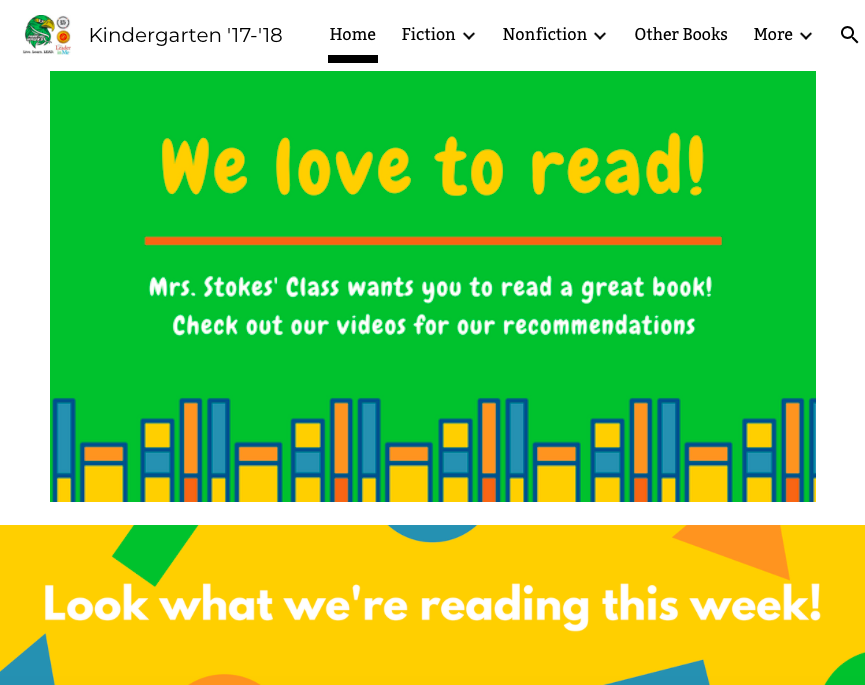
The practice of having students recommend books to their classmates is no new idea, however Kindergarten teacher, Jenny Stokes, recently decided to take this tried and true method and make it more engaging through the use of technology.

On any typical day, visitors can stop by Mrs. Stokes’ class during literacy block and find students actively engaged in a variety of tasks designed to increase fluency and ignite an excitement for reading. One of the most popular activities has quickly become the class book recommendations vlog. During this activity, students are either making book recommendations or browsing through their classmate’s videos in search of a recommendation matching their interests.


When a student is ready to make a recommendation, they use the iPad to record a video explaining why they would recommend the book. With support from their teacher, the video is uploaded to Google Drive and added to the class vlog created in Google Sites. Videos are organized by genre and kept up to date by Mrs. Stokes. Students are anxious to share about books they love! Zanelly said, “I like recommending books so my friends can read them and I like seeing what books my friends like to read so I can read them again.” 


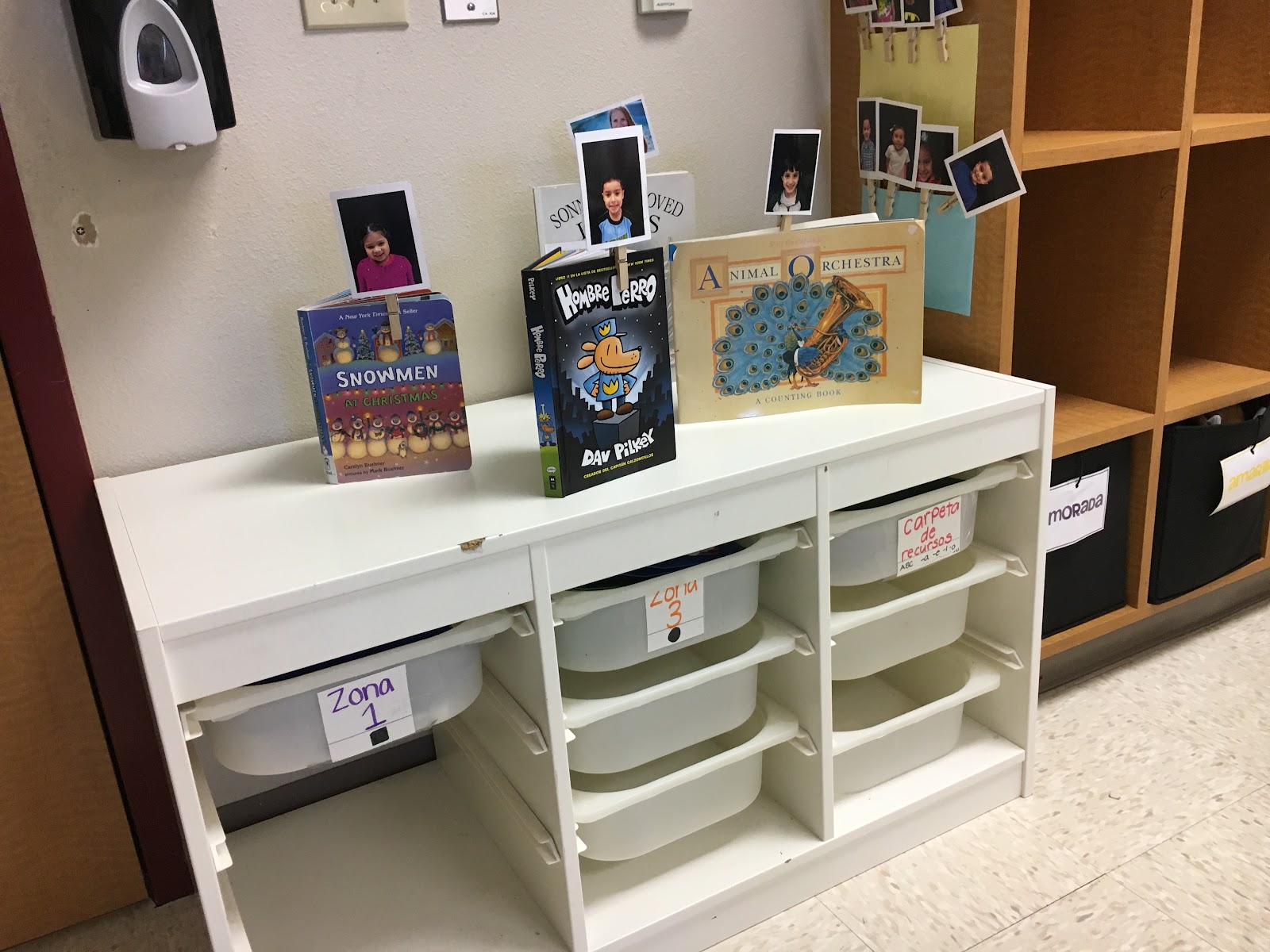
Students acting as consumers of the vlog, have been trained to independently login to a Chromebook using a QR code. Once active on their profile, students are able to access the class vlog easily through a link in Google Classroom. Students spend a few minutes watching their classmate’s videos before settling on a book. The latest featured books are displayed in a center so students can quickly locate them and begin reading. Their sweet grins and excited nature is evidence this practice is working wonders to build a love of literacy. Yahel shared, “I like it because you can see the other people’s books.” 

Mrs. Stokes believes the activity provides students the “opportunity to use something other than tablets and an app.” She feels the process of working with the vlog “ is making them more independent and teaching them to solve problems.” 


While the plan was for students to develop and grow, Mrs. Stokes found that she did too. In the original planning session with her Instructional Technologist, Jenny first hoped to develop and maintain a class blog. Once she saw how easy the platform was, she took it a step further and invited students to be not only consumers of the vlog, but also producers. It wasn’t long before students were taking videos on iPads and using QR codes to login to the Chromebooks independently. In the future, Mrs. Stokes envisions turning the vlog over to her students and allowing them to manage and organize their own videos. 


This lesson is a perfect example of the learning that can unfold when a teacher is willing to take risks and learn alongside their students. The motto at Prairie View Elementary this year is “Move Mountains” and boy are these tiny tots learning what it means to put caution to the wind and tackle even daunting tasks!

Monday, March 12, 2018

Spark Learning: Inquiry-Based Learning in 5th Grade

If you could be any creature at all, what would you be? Which ink spreads the least in water? Can a flashlight be powered by the sun? Can water be purified through evaporation?

These were only a few of the questions that 5th grade scientists at Prairie View Elementary school answered through their own research and the scientific process. Their teachers, Mrs. Davidson and Mrs. Ward, challenged them with an Inquiry Project; Mrs. Davidson explained, “They created their own questions based off of personal interests, and followed through with gathering data, analyzing their data, and creating a presentation to show their results.”


Mrs. Davidson added, “We wanted them to learn to question something on their own”. They challenged students to think about how they approach a problem, and even how they would handle social situations, how people would handle money or respond to various circumstances. But most of all, they gave students choice. For their inquiry project, students could choose any topic that sparked inquiry: they could investigate something entirely new or ask a question that extended previous inquiries from their time in school. One of her students, Kaden shared, “I like that [the inquiry project is] a creative activity”, and that after this project, he “knows how to answer [his] questions”.


Following the steps of the scientific process through inquiry-based learning, students developed questions and hypotheses before performing research. Zephyr’s team was interested in conducting a social experiment. They wanted to know, given a few staple options, what food people would eat for the rest of their lives if that had to. He said, “We made a survey and asked the staff and 5th, 4th, and 3rd graders. We collected the data and looked at the pie chart… Surprisingly, most people prefer pizza.” Zephyr added, “It’s important to answer questions because we can learn”.


Both Mrs. Ward and Mrs. Davidson, co-teachers in math and science, highlighted how integral both math and science were to the processes students were tasked with completing. Mrs. Ward clarified, “You can’t do science without math, they’re married”. Student Davis made cross-curricular connections through this project, explaining that what he learned can be applied in other areas of his life. He made the connection talking about math and problems in general, “...first [I] look at the problem and then think about it. Then, get a solution. It’s the same as science.”


Ultimately, inquiry projects like this one offer students choice, but not at the expense of content knowledge or the skills students are developing through their own hard work. For example, one team learned the steps of the design process as a part of their inquiry. They wondered, “Can you clean water through evaporation?” To find the best way to measure their results, students had to design an evaporation system that would test their theory. They collaborated to created two different designs, tested each design to see which worked better, and tested their original hypothesis. Other group's experiments failed, but Mrs. Davidson stressed to them that failure is a part of learning and of the scientific process - failure is an opportunity, so they would present about what they learned through their failures.


A crucial aspect of this assignment was that students’ inquiry was driven by the end-goal of presenting their scientific findings to their peers and an audience. As students prepared to present, they had choice in how to showcase their findings. They created videos, posters, and traditional slideshows chalked full of tables and graphs; this autonomy and choice helped to foster their passion to share what they had learned. Students were even given the opportunity to present to an authentic audience at EXPO, the district’s student showcase. Student Davis excitedly shared that his team’s project was picked to present at EXPO, saying, “I did it last year and really liked it. I like getting up there and presenting.” His team made a video "...because it captured what the person was actually saying" Although he thought the video gave them more accurate data, h
e was quick to reflect on what he would change to improve his presentation before the event, explaining, "We are going to add subtitles".


Mrs. Davidson acknowledges that managing and guiding so many student-groups at a time can be challenging. A project like this requires teachers to step out of any traditional role, and into the role of facilitator. They have to be the supporter, to ask guiding questions, manage supplies, point students to resources for help, and all the while handling classroom management. To be successful, she explained that she gave her students a step-by-step checklist and detailed calendar of due dates and expectations at the start of the project. Mrs. Davidson -- a self-identified control freak -- points out that it's important to let go and let them do it. “Because it’s their own exploration, it’s high interest and high energy,” she stressed, “It’s worth the mess.”

Tuesday, October 10, 2017

Notebooking Unleashed

Chisholm Trail Middle School and Prairie View Elementary School share a lot more than just a parking lot. Both campuses are brimming with innovative and creative professionals, continually seeking opportunities to transform student learning.  Mrs. Branstetter, fifth grade ELA teacher at Prairie View, Mrs. Bush, eighth grade ELA teacher from Chisholm, and Mrs. Thompson, eighth grade ELA teacher at Chisholm decided to think outside the box this year! All three teachers have been exploring options for students to digitally record and organize writing assignments completed in class.   Teachers hoped to provide a way for students to collect work so they could easily revisit content throughout the year, independently seeking feedback and monitoring their own progress.
Often times, the most common barrier teachers face when implementing more opportunities for feedback and progress monitoring is management.  Teachers are left wondering… How do I provide adequate feedback to all my students?  With 100+ students, how can I access all these stacks of journals anytime, anyplace?  How can I ensure it’s timely?  All of these questions bring up valid points.  In the article, 7 Keys to Effective Feedback, Grant Wiggins utilizes the research of John Hattie to develop the essentials of providing feedback.  Wiggins states feedback should be actionable, user-friendly, timely, ongoing, and consistent.  He also encourages educators to “work overtime to figure out ways to ensure that students get more timely feedback and opportunities to use it while the attempt and effects are still fresh in their minds.”  He goes on to say, “Before you say that this is impossible, remember… technology is one powerful tool.”  

These 3 teachers did just what Wiggins suggested, working overtime and turning to technology to find a solution!  The answer they had been searching for was interactive digital notebooks.  While maintaining a paper journal in class remains a priority, when appropriate, students also utilize a digital notebook for assignments where interactive feedback would be beneficial.  

Screen Shot 2017-10-08 at 11.15.35 AM.png


Through the use of Google Sites, students are able to upload writing assignments and organize them in a fashion that’s easy to follow.  This process allows students to share their work easily with their teacher, classmates, and even parents.  By publishing their notebook, students can even reach an audience outside the walls of their classroom.  Imagine the implications of this for a student applying for a job, internship, or even college scholarship.  All of their work is at their fingertips and only a click away from sharing with the world.  With the potential for such a large audience at play, Northwest ISD has recommendations in place for students with regards to keeping their personal information private.  Classroom teachers have also explored ways for students to maintain utmost privacy on personal documents, such as progress monitoring.  For example, when students in Mrs. Branstetter’s class upload their grade monitoring document to their site, they will enable the “share” settings for only their teacher to be able to see.  When visitors click on this part of their site, they will receive a message that they do not have access to this individual document.  It’s the best of both worlds!    


Click the pictures below to enlarge the images and see a glimpse of a student notebook. In this example, the assignments from Unit 1 have been collected and organized on one page. The second image shows the section reserved for student Cornell Notes.


Looking ahead, these teachers see limitless possibilities for student success using this digital format.  As teachers attempting to prepare their students for a transition to the next level of school, either Middle School or High School, teachers are considering the potential of sharing these notebooks with teachers from the feeder campus students will attend.  At the end of the school year, students could give their soon to be teachers, a glimpse of what they have accomplished, prior to embarking on their next level in school.  Teachers would have a window into the classrooms of the previous year.  The vertical alignment this would allow for is priceless. With a little research and a lot of hard work, these teachers transformed an often mundane task into a dynamic learning experience for their students'.

Monday, December 8, 2014

Shhh, don't tell! Using Descriptive Writing To Show

Second graders, in Ms. Whorton's class, at Prairie View Elementary have spent the last several weeks studying author Vera B. Williams. In their studies, they have specifically focused on her craft for using language to show, rather than tell, how a story character is feeling. Through exploring various books she has written, students have begun to implement her ideas into their own writing.


In this lesson, students were charged with using descriptive language to write about an emotion. Students worked with partners during this task. Cutting apart a chart of emotions they are familiar using as writers, students randomly chose an emotion out of a bag to descriptively write about. The catch? Their writing could not include the emotion they were describing. They had to truly show what their emotion would look like through their writing.

Using Doceri on the iPads, students documented the different stages of the writing process. Each group took a picture of a tree map that was then used to begin brainstorming ideas. Their tree map included descriptive ideas for what they see, hear and feel when they experience the emotion they were trying to describe. Partners also took time to take a selfie, truly documenting what their writing would ultimately describe.


Tree maps and selfies were both used as students began composing their best descriptive writing in their notebooks. Once their writing was complete, partners took pictures of their notebooks and inserted them into their Doceri presentations. Groups recorded themselves reading their writing, being sure to circle the text evidence that showed, not told, the mystery emotion.

As Doceri presentations were shared at the end of class, student groups enjoyed inferring what their classmates were writing about. This lesson was interactive and provided students an opportunity to begin crafting a piece of descriptive writing that painted a picture for their readers.