Showing posts with label CTE. Show all posts
Showing posts with label CTE. Show all posts
Monday, October 23, 2023

Monday, October 25, 2021
Define > Dissect > Design = 3D Print Using MinecraftEDU
Students at Adams Middle School were given a life-like challenge to modify various puzzles with very small pieces for a child with a visual impairment. CTE Teacher, Mrs. Sheila Greene, wanted her students to practice an engineering skill called mechanical dissection of an object to understand an object's detailed design.
To modify the puzzle, you first have to mechanically dissect the layers of the puzzle. The first step into dissection is to isometrically draw all of the pieces of the puzzle on graph paper for accuracy to get an understanding of the 2D layers. Jeremy F. said, “I like how I can see my mistakes, not to mention how this helps me in robotics and computer science.”
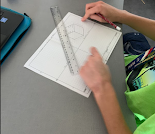
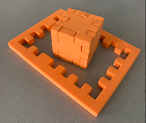
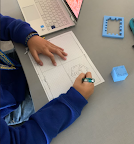
Students documented the following in their journal during the investigation:
- Steps for how you assemble and disassemble the toy.
- Multiview sketch of each puzzle piece.
- Fully dimensioned sketch of the puzzle pieces

“This type of learning is preparing me to become a mechanical engineer,” said Jonathan F.
This 2021-2022 school year NISD purchased Minecraft Education Edition for teachers and students to integrate into any content area. Minecraft Education Edition is a game-based learning platform that promotes creativity, collaboration and problem-solving in a digital environment. Common Sense Media states about Minecraft EDU, “Minecraft EDU is an excellent tool to engage students in learning, collaboration, and critical thinking and is now more accessible than ever to teachers.”
To bring real world connections to the project, Mrs. Greene challenged her students to use digital tools to design larger puzzle pieces that will be printed on the 3D printer. Students needed to use their math and thinking skills to tinker with the X, Y, and Z axes to get the model placed into the build area


Being that Minecraft is new to NISD, Mrs. Greene did not know how to execute the program, but after a conversation with one of her expert students, Ayden, he volunteered to create a video tutorial and teach the class.


As Ayden showed students how to print their work, Evan T. circulated among students helping them with Minecraft settings and block placement. Now students in Robotics 1 are also using what they learned from Ayden and Evan and other student experts to create Minecraft-themed decorations to 3D print for their pull-toy mechanism. Mrs. Greene said, “it is so cool to see students teaching each other and figuring out solutions together -- that’s real world collaboration and skill-building that increases their confidence and their trust in each other at the same time.”
At the end of the experience, students will print their images on the Dremel 3D Printer. Check out some of their work below:

All of the NISD Minecraft for Education resources can be found here. Feel free to contact your campus Instructional Technologist to answer any questions you might have.
Monday, January 13, 2020
Personalized and Self-Paced Learning for Educators and Students
Classrooms looks different today than they did years ago. We've evolved from a traditional classroom setting where the teacher is lecturing, to a classroom that is active, innovative, and the students are driving the learning. As an Instructional Technologist, I have been fortunate enough to see many different ways educators approach teaching and learning--from the traditional learning model to some of the most innovative and creative classrooms. To create an innovative, open, and creative place for students and teachers to grow, take risks, and feel comfortable in their own patterns of learning three educators have raised the bar to provide those experiences. This past fall semester, Mrs. Roberts, Mrs. Seale (CTE Teachers), and Mrs. Toht (Science Coach for NISD) reached out to their campus Instructional Technologist, Rene' Egle, to brainstorm ideas of ways to raise the level of learning for students and teachers by integrating technology.
The College and Career Ready course called Professional Communications is an 8th grade curriculum taught by Brittany Roberts and Vanessa Seale at Wilson Middle School. Past learning experiences to present the 27 CCR pathways has been a very teacher driven type environment. This 2019-2020 school year the campus Instructional Technologist hosted a TechBytes during PLC’s titled Creating Choice Boards. This inspired Mrs. Roberts and Mrs. Seale to create a choice board of innovative student facilitated learning of the many pathway opportunities that CTE has to offer. Students were able to click to view their options they were most interested in and document using a Google Form that provided interaction and reflection. Mrs. Roberts stated, “This strategy was useful for students and not overwhelming with multiple documents or pages.”

The excitement and benefits of self-paced learning didn’t stop at Wilson, science teachers throughout the district were provided an opportunity to a self-paced learning experience at district professional development held on January 6th. Courtney Toht, NISD Science Coach, brainstormed new ways to introduce the learning experience called Argument Driven Inquiry or ADI which is an eight stage lab process. She wanted to keep her teachers active and engaged while practicing the productive struggle which we expect of our students. After visiting with her campus Instructional Coach Rene' Egle and Library Media Specialist Jamie Eikenberry, she developed an escape room full of interactive tools to work through the learning of the ADI concepts. Courtney stated, “I needed a way to facilitate PD to teachers in multiple rooms. Also, many teachers expressed interest in learning about escape rooms, so what a better way to present this new information that we will dig deeper into during the summer training. I thought it would be a good way to allow teachers to experience an escape for learning purposes and then learn how to make them in another session.


Because educators today want to have evidence that different learning styles have a positive impact on learning, Mrs. Toht developed a puzzle using Jigsaw Planet to provide evidence. Click here for the puzzle


The last step to the ADI Escape room use the tool called a Snote. Snote is a unique and creative way to deliver key words in a secret message. The teachers loved using the directional sliders to find the hidden words. With the conclusion of each category they were given a set of CLUE WORDS to unlock the room, just like the public escape rooms that are so popular today in our communities. Click here for Snote

The choice board and escape room are just a few examples of how technology has helped changed the student/teacher roles in the classroom. Students take responsibility for their learning outcomes, while teachers become guides and facilitators. Technology lends itself as the multidimensional tool that assists that process.
Monday, May 20, 2019
Guiding Today's Learning with the Tools of Tomorrow

We have all heard the saying about “...preparing students for jobs that don’t yet exist.” While that may be true, the best preparation for a future yet to materialize is to let go of the idea that we, the educators, are responsible for preparing them for the future, at least in the way traditionally thought. It is more necessary for educators to step out of the way and to let the students take control of their own learning in order to foster engagement, authentic growth, and innovation.
Rob Austin & Lee Devin, the authors of Artful Making: What Managers Need to Know about how Artists Work, describe innovation as a process where managers need to forget about the traditional destination and journey mindset. The idea that someone has to have a crystal clear objective in order to justify movement toward a goal, at least as we know it, is becoming obsolete. In truly innovative environments, collaboration, flexibility, creativity, and growth mindsets can lead to the discovery of new paths rather than a predictable route to success. When we work with our students to facilitate the realization of their creative ideas, our students can develop necessary skills for the modern workplace while becoming leaders that guide their own success. Setting students free to create and innovate is interesting in theory, but how does this look in today’s classroom?

At Eaton High School, William Gilbert’s Computer Programming students investigated possible uses for innovations in virtual reality technology prior to being tasked with coding and creating their own tools, geared for the same purpose. Students were given the freedom to imagine other applications and uses for this type of technology and began inventing their own VR programs designed to meet real needs predicted for future learners and workers. After learning about the educational benefits or virtual reality, many students began working on utilizing VR technologies in the workplace and school settings and have even begun testing their work in the context of their existing classrooms.
Business Academy students in Tabatha Everett’s Entrepreneurship course were given the challenge of studying and determining future viability of an up and coming technological business model in their Pokemon Go AR Challenge. These students used a case study of Niantic's Pokemon Go app, from a previous Virtual Enterprise International Competition, as a model for mobile augmented reality use in business. They studied usage trends, obstacles for expansion, effects of the app on user quality of life, modifications and additions to the game, as well as the company’s efforts to meet user demand.

The student led part of this project allowed them to critically explore real questions surrounding the game, the technology used, and future opportunities for AR revealed by Niantic’s venture. Students then created a proposal of their own for marketing with augmented reality integration in other business areas. Some of these proposals explored the potential for business partnerships through integration of AR, virtual dressing rooms for purchasing clothing, and virtual showrooms where consumers experience product features of items like furniture, cars, or appliances. One group even outlined the potential for online AR marketing events with real rewards for consumers. The students exploration of this innovative platform allowed them the ability to dream about untapped ways this technology can be used to impact the future lives of consumers.

Another group of students in Donny Pharr’s Introduction to Aircraft Technology courses researched commercial drone use and considered business models, laws restricting flight areas, and other logistical factors related to commercial drone aviation. After completing the initial research process, students were given the task of creating their own plan to re-purpose drone technology for the benefit of school district sponsored events. They were given the freedom to invent ways this technology could enhance experiences at high school sporting events. The process resulted in groups outlining utilization of drones for concession stand food delivery at NISD football games. They mapped out geofencing boundaries around the NISD stadium as a foundation for designing their delivery service, via drone technology. This real world scenario was conceptualized by allowing students to creatively think about solutions for the problem of crowded venues and long concession lines at NISD events. They met various obstacles and limitations while working their way through the learning process, which resulted in them constructing their own ideas for innovative and practical use of existing technology while visualizing the potential for drones to breed entirely new careers.
While these classes are just small examples of student exploration and innovation, they are prime instances of the ways learners can begin to dream about the future and how their own educational journey can forge a new path that previously did not exist. Of course, just removing all classroom guidance and parameters for students is not what is being suggested. Whether your students are part of specialized areas such as these, or whether they are searching to connect existing content and skills to real life, giving them the freedom to explore possibilities for applying skills beyond the classroom is what will open up their imaginations to new ideas. Simply put, if we present problems for our students to solve and then step out of their way in order to let them dream, fail, learn, and innovate, we can facilitate results that outshine anything previously imagined and students can forge incredible new paths for their futures.
Wednesday, April 17, 2019
These Documentaries Are KILLER!
We are led by example.
Think about it: Have you ever... Put together a puzzle without first looking at the cover to see what it's supposed to look like once complete? Made a craft or home improvement project without first looking up inspiration or instructions on Google or Pinterest? Saw a movie without watching the trailer or reading the synopsis? The answer is mostly likely no, as we are driven by seeing something that we can connect with.
Because of this need for inspiration to draw from and even deviate from, it is often challenging to ask our students to create - the highest level of Bloom's - without giving them any sort of frame of reference. Couple that with asking students to use a new tech tool, conduct a research project on an unknown individual, and apply taught curricular concepts to a new creation may feel daunting for even our traditionally higher performing students.
Recognizing all of these factors, Becky Ainsworth - Forensics Science teacher at Byron Nelson High School, created multiple resources to set her students up for success. Students in this upper level class were tasked with creating a mini-documentary that detailed the forensic psychology of an infamous serial killer, and were to present the information in a video format using Adobe Spark to make it view like a true documentary.
 |
| Click to view Mrs. Ainsworth's Spark Project Instructions. |
In previous years, students presented this content in a traditional format by standing in front of the class and retelling their information. This type of presentation lacked student engagement, was time consuming, and the success of a exemplar product was confined to that class periods' limited audience. To elevate this experience, Becky then replaced the traditional presentation format with the documentary style project requirement. With any first year project, there aren't a bank of examples to pull from, so it was a genius idea that Mrs. Ainsworth created and delivered the project instructions using the exact tool, Adobe Spark Video, she was asking students to use. Additional relevant information, including required content and the grading rubric, were showcased on a traditional document project outline.
Next, students were empowered with full creative freedom to add content from any reliable source (with a minimum of at least 3) as they conducted their own research. The documentary is a visual, video presentation, so the main premise requires a series of photos and videos that have a voice-over to tell the story using very little, if any, text on screen. Students used sites such as Pixabay to find free stock photo and video clips, as well as truly realistic clips that depicted the actual serial killer in photo or video. Check out these top two mini-documentary creations:
 |
| Ian Brady: As told by Lauren |
 |
| Jeffrey Dahmer: As told by Kai and Tony |
Once video creation was complete within Adobe Spark, students downloaded their videos and then uploaded them onto a collaborative YouTube Playlist that would house projects for all Forensic Science students at BNHS. By uploading to this platform, students were able to share their creation beyond the walls of their class period and could in turn view documentaries created by students studying the same content in a completely different class period. Publishing to YouTube allowed students to have a broader audience, made the presentation format more engaging as students got to watch multiple mini-documentaries, and created a wealth of examples to draw from for the following school year. Since Mrs. Ainsworth's classes in all had 57 videos on their Playlist, Mrs. Ainsworth plans to pick the top exemplars, as well as non-examples, from this collaborative playlist to make a new, shortened, and focused playlist to support next year's students as they, too, begin this exciting creative project.
This project meets ISTE Student Standard of being a Knowledge Constructor (3) in which students
- 3a: Students plan and employ effective research strategies to locate information and other resources for their intellectual or creative pursuits.
- 3b: Students evaluate the accuracy, perspective, credibility and relevance of information, media, data or other resources.
- 3c: Students curate information from digital resources using a variety of tools and methods to create collections of artifacts that demonstrate meaningful connections or conclusions.
Tuesday, September 25, 2018
Skilled Students: With the Certifications to Prove It
Every choice Patti Hayes makes about her Business Information Management course is funneled through Career and Technical Education (CTE)’s vision for future-ready students: “Skilled, Credentialed, and Ready”. Though, this isn’t unique to her classroom. In high school CTE classrooms throughout Northwest ISD, students are given every opportunity to graduate both skilled and certified with professional, industry certifications.
From students in Health Science earning CPR certifications, to those in Architecture classes certifying in programs like AutoCad, NISD students are graduating, at no cost to them, with industry certifications. “People need to understand that when we talk about industry certifications,” STEM Coordinator Casey Helmick explains, “it’s not like when I was in high school, a computer test that doesn’t mean anything. We are talking about certifications adults are currently paying for in order to get or keep their jobs. That is one way we set our kids up for future success.”

Through CTE, students have access to 27 pathways, each offering unique certifications that relate directly to degrees or fields of interest. For example, engineering students in the STEM Academy earn OSHA certifications their freshman year, and many have earned Autocad and Revit certifications by the time they graduate, while students in Business Information Management have the chance to become Microsoft Masters -- a title many are determined to earn before graduation.
Here is how it works: NISD high school students enrolled in any CTE class have access to Jasper and G-Metrix online, both certification curriculum platforms. Jasper teaches students Microsoft skills, challenging them with 8 skills-based lessons before their final creation project. GMetrix teaches programs like Autodesk and Adobe through 4 create-as-you-go lessons. Once students are trained, they test to certify through Certiport. In addition to these tools, students can supplement their learning with video tutorials from a site called Lynda.com, to which all Northwest ISD students have access.
Northwest High School (NHS) student Hulen Howard is currently certified in OSHA and working on both his Revit and Microsoft Word certifications. “It is the difference between having experience and having something to show that I have this experience,” He said. “If I apply for a job and claim I know Revit, my certification will show them what level of experience I have.”
Patricia Tran, NHS CTE teacher, reminisced, “I have students from the past who call me and say, ‘Hey Mrs. Tran, do you still have that certificate for PowerPoint or Word?’ because now they need it for work. One of Mrs. Tran's former students, Derek Maynard, who is currently attending the NCTC and working as on a maintenance team, can attest to this. He said, "My certifications [allow] me to show off my technical skills that I have learned... and how hard I have worked to get here. [They] have even opened up special opportunities for me at work. I was asked by my current employer to create a 3-dimensional drawing of a stage, based off of my Revit experiences."
Students seem to understand the benefit of pursuing these certifications. Helmick explains, “There are certifications connected to or linked to their pathway, but students aren’t limited to their pathway. They can earn certifications based on what they feel will give them the most potential and advantage on their [resume].” In fact, many Steele Accelerated High School students work towards certifications during their free time.
Steele senior Bergon Connor says he is going through certifications to better himself and build his resume. “I was focused on getting those certifications. Once I got one, I couldn’t stop.”
“A lot of us, when we started, didn’t think [certifications were] important or helpful,” Steele senior Sarah Alam clarified, “Even me. But once I did [start], I realized that having those certifications will be so helpful for [my] future.” For Sarah, who plans on pursuing a theater degree at the University of North Texas, certifications are a way to secure her financial future. She joked, “Believe it or not, theater doesn’t pay that much, so pursuing a job in Data Entry while I am in school will help me. I need a good, stable job as a backup plan.”
 Students talk about how certifications can help them reach their goals. Someday Cosmetology student and junior Abigail Warmbrod hopes to open her own salon and massage parlor, and she knows that her certifications are preparing her to present to her employees or use Excel to manage the books. But for now she is learning through her Academy and working a high school job that, she says, her certifications helped her get, “I had a job interview where I was able to explain my certifications. Even though it had nothing to do with the job, it stood out, and I was able to make those connections for them. And it helped me get the job.”
 Her teacher, Ms. Hayes, shared more of Abigail’s story, stressing, “Her first year she struggled. But she is determined and [she is] tapping into the resources available to her. To me that is the success story – someone who has struggled to certify, and then continuously battled, but stuck it out.” Hayes added, “It's about learning to be independent and pushing through their struggles. That is the success story…"
To date, Abigail has earned numerous Microsoft certifications, including Outlook, PowerPoint, Excel and Word Expert. Her next step is to become an expert in Excel, a test labeled by many as one of the more challenging certifications. “I am very determined to do it. I want that feeling of ‘I am done’. I don’t want to start something without finishing it.” Abigail’s classmate, Sarah, repeated this sentiment, “It’s difficult, but you’ve got to get through. I took Excel [multiple] times, but I pushed through it. And it’s taught me to be persistent and not stop trying. To gain skills and knowledge is really helpful no matter how difficult it is.” Abigail takes her test next Thursday.
Tuesday, September 4, 2018
The Power of Learning by Experience!
This past spring, students in Mrs. Hayes Business Information Management class experienced the power of learning by experience! Students not only ran their own sports and entertainment business through simulation, but organized their research and experience in a cumulative Google Site.
Martha, currently a Sophomore in the Steele Collegiate Academy ran a successful business and learned a lot along the way. While the research and formative quizzes were an important part of Martha's learning, she truly enjoyed the Google Site as it was her means of reflection. "My Google Site allowed me to communicate everything about my business," commented Martha. "It helped my organize and highlight important information. It also helped me convey my learning in terms that those who didn't know about business could understand." Martha utilized Google Sites to it's full potential as she carefully chose images that would appeal to her audience and used captions to explain their importance.
Martha has since added this project to her personal ePortfolio and had the opportunity to share with community members and other students at Steele's 2018 Spring Showcase. She also has earned several certifications last year, one being the Entrepreneurship for Small Business Certification. "I got a 650 out of 700 the first time, but then I sat down with my friend Cassie and we went through what we knew and taught each other. I retook the test and past." Martha also went through Lynda.com courses to study for her certifications.
"When I first started the Business Information Management course, I didn’t think I’d enjoy it," said Martha. "Now, I’m planning to be in Coach Hayes course next year. I can see myself being in a career like this in the future, but regardless I learn so much"
 |
Perhaps the most personal and powerful aspect of Martha's site, was her use of Screencastify to explain her learning and the development of her business. Screencastify was a new tool for Martha. She points out, "I hadn’t used Screencastify before. A junior came in and showed us what Screencastify was and how to use it. I wasn't sure at first, but it ended up being really easy and made my website more interactive and personal." Martha also pointed out that the purpose of her video and website was not simply to show how she passed the simulation, but to truly explain the business to others. Check out one of Martha's videos:
According to Martha, the most challenging part of this project was the business simulation "The quizzes and reading were pretty easy, but passing the simulation was probably the hardest part. It’s not a memorization portion, but it is skills based." the fact that students had to problem solve and make decisions during the simulation, led to a meaningful and reflective experience.
 |
| Martha Sharing Her ePortfolio and Project at Steele Showcase |
"When I first started the Business Information Management course, I didn’t think I’d enjoy it," said Martha. "Now, I’m planning to be in Coach Hayes course next year. I can see myself being in a career like this in the future, but regardless I learn so much"
Monday, May 21, 2018
Giving Students the "Keys" to Engage
 Many adults
falsely assume that the current generation of students is lacking any sort of work
ethic, loyalty, or desire for learning independence. Some mistakenly stereotype an entire generation of students as full of apathy and an inability to think critically or engage
with a world outside of social media. What many fail to
see is that we are educating a generation of individuals who may have more
intrinsic motivation than we realize. The challenge we face is not how
to teach students these qualities but to find ways to bring them out in our
students and give them opportunities to apply the necessary thinking to content as
they learn to grow and develop the skills we desire to see.
Many adults
falsely assume that the current generation of students is lacking any sort of work
ethic, loyalty, or desire for learning independence. Some mistakenly stereotype an entire generation of students as full of apathy and an inability to think critically or engage
with a world outside of social media. What many fail to
see is that we are educating a generation of individuals who may have more
intrinsic motivation than we realize. The challenge we face is not how
to teach students these qualities but to find ways to bring them out in our
students and give them opportunities to apply the necessary thinking to content as
they learn to grow and develop the skills we desire to see. In his first year at Eaton High School, Canaan, a
Business Management and Entrepreneurship Academy student, was brainstorming for a Junior Achievement Company idea and had a desire to do something that had a “real effect on the world” or solved a real-world problem.
He also happened to read an article about human sugar intake and how it was
linked to diabetes, cancer, and other health problems. As Canaan continued his research, he watched a documentary on the topic, which spurred him to begin
tracking his own sugar intake for about a week. He started tracking it on paper
and saw that his own sugar intake far exceeded the amount recommended. His
research supported that this was not uncommon and Canaan's very startling discovery
prompted him to think about how important is was for people to understand
and be aware of this issue. Through his research and continued tracking, Canaan’s
interest in this area grew and he wondered if there was an easier way for
people to track their own sugar intake. He found few apps and tools online to
help and even researched some of the major personal health trackers. While
looking at some of the more widely used digital trackers, he found that their primary function
was to count calories and fat and that most of them grossly underestimated
grams of sugar in foods he consumed. Canaan knew there must be a way to create something
to meet this increasing need and started looking for courses at school that would help
him pursue this new found interest.
In his first year at Eaton High School, Canaan, a
Business Management and Entrepreneurship Academy student, was brainstorming for a Junior Achievement Company idea and had a desire to do something that had a “real effect on the world” or solved a real-world problem.
He also happened to read an article about human sugar intake and how it was
linked to diabetes, cancer, and other health problems. As Canaan continued his research, he watched a documentary on the topic, which spurred him to begin
tracking his own sugar intake for about a week. He started tracking it on paper
and saw that his own sugar intake far exceeded the amount recommended. His
research supported that this was not uncommon and Canaan's very startling discovery
prompted him to think about how important is was for people to understand
and be aware of this issue. Through his research and continued tracking, Canaan’s
interest in this area grew and he wondered if there was an easier way for
people to track their own sugar intake. He found few apps and tools online to
help and even researched some of the major personal health trackers. While
looking at some of the more widely used digital trackers, he found that their primary function
was to count calories and fat and that most of them grossly underestimated
grams of sugar in foods he consumed. Canaan knew there must be a way to create something
to meet this increasing need and started looking for courses at school that would help
him pursue this new found interest.
Canaan
eventually signed up for William Gilbert’s web applications course where he
could acquire basic knowledge for coding and building apps on his own.
Mr. Gilbert recalled Canaan approaching him about one of the course assignments
and asking to incorporate his ideas for sugar tracking. Mr. Gilbert said that “He
changed the assignment when he came to me about his research and asked me to allow him to do
something different and more complicated.” Gilbert allowed Canaan the opportunity to pursue his area of interest and Canaan turned it into Bloom, an app for sugar intake tracking.

Canaan has since
continued to update and work on his app and has an entire notebook, or journal,
for ideas he plans to incorporate. He did say that he was a bit disappointed
that there were only so many courses he could fit into his schedule to advance
his desire to code and develop apps. However, Canaan continues to record suggestions
from classmates and gathers outside feedback to help him continue developing
ideas for evolving his app. He plans to develop this web based application that
can also be accessed from a computer or a smart phone and wants to incorporate
a variety of convenient features in the future to help with more accurate tracking of sugar intake.
Without the opportunity provided in our BME academy to creatively think about societal needs and possible business ventures and without the willingness of Mr. Gilbert to hand over the “keys” to learning to his students, Canaan’s idea would not have come to fruition. It’s his personal drive to make a difference and the willingness of Canaan's teachers to facilitate and open up this opportunity that drove Canaan to conceptualize his "passion project" while also learning useful and relevant academic skills.
Without the opportunity provided in our BME academy to creatively think about societal needs and possible business ventures and without the willingness of Mr. Gilbert to hand over the “keys” to learning to his students, Canaan’s idea would not have come to fruition. It’s his personal drive to make a difference and the willingness of Canaan's teachers to facilitate and open up this opportunity that drove Canaan to conceptualize his "passion project" while also learning useful and relevant academic skills.
Mr. Gilbert’s
web applications course also allowed three other innovative students an
opportunity to develop tools that not only met a course requirement, but also
addressed a need in the Eaton UIL community. Nate and two of his peers, Devon
and Nate, are part of the Eaton UIL computer science team. While at
competitions, they noticed that results were usually printed on a single 8½ x
11 sheet of paper and posted on a wall in the school cafeteria for a bunch of
students to crowd around and try to decipher. They felt that this method of
sharing competition results was much “more difficult than it should be” and they worked together to develop an app that works with current University InterscholasticLeague (UIL) event tabulation procedures for electronically communicating competition results.

The app was deployed at an Eaton UIL competition last year and worked
incredibly well for electronic dissemination of news updates and scores and
efficiently communicated rounds and results to all students and coaches. Nate
said that he liked how the app “alleviated a disconnect between scorers and competitors.”
It worked so well that these students decided to add in speech event tabulation
to the app for the 2018 Eaton UIL tournament. The feedback from their endeavor was all positive and noted how well these students served a legitimate need in the school community.
Another group of students who utilize passions and skills acquired through academic course study can be found in Eaton High School’s Book Club, sponsored by the EHS Library Media Center. Crystal and Jasmine are prominent book club members and say they joined book club because they school helped them to acquire a love for reading and they wanted to connect with friends who also loved to read. Jasmine, specifically, appreciated that Mrs. Sarah Thomasson took an interest in her, as a new student who was previously home-schooled, and showed her that she could reach out to others in the group by joining book club and getting involved with the YouTube channel, called "ISBN Thinking," produced by its members.

The channel was
started after members students, who had an interest in other online book reviews, realized that they had all the skills and resources necessary to produce something similar,
and according to Crystal, “We knew we could do it better.” The students worked
with Mrs. Thomasson to utilize library resources for recording of online book
talks and originally used a back room in the EHS library for producing and
editing of their videos, which they learned to do with the knowledge gained in
several of their classes and with the help of Mrs. Thomasson. The EHS Book Club meets during lunch shifts or Eagle Time to film and they have produced video reviews of books available through the Eaton High School Library.
These students also make an effort to cover all of the North Texas “Battle of the Books” texts and involve all twenty-two
members of book club in reviewing books and filming
talks.
The group is
currently not posting new videos because they are in need of a new location for filming
and hope to find a suitable and accessible location at EHS very soon
as they have plans to increase filming on a more regular basis and to organize the group with a set schedule and structure that they believe will provide added online and library traffic. These students love being able to share their own passions for reading, critical analysis, and video production through this very
relevant educational outlet that is meant to strike a love for
reading in other EHS students.
Obviously, there
are an innumerable amount of opportunities for students at NISD to find and
pursue individual passions through academic study. Allowing students to take
control of those opportunities and push themselves forward are what will empower
and motivate them to positively engage with and change their community. These students are part
of a generation described by many adjectives but apathetic, disengaged, and
lazy should not be part of them. This generation is motivated to go above and beyond in pursuit of things that are important to
improving the world around them if educators will only help them to engage in content
in ways that interest them. With an
amazing wealth of tools to help students access those opportunities and fuel the
desire to do more than consume technology and resources they can create in ways
that will permanently benefit the world.
Tuesday, November 14, 2017
Academic Social Media

Students long for a platform to make their voices heard. So much so that 94% of all teens ages 13-17 are on social media. While various negative factors have influenced an adult’s perception of the value of social media, “new research is shedding light on the good things that can happen when kids connect, share, and learn online” according to this article from Common Sense Media which identifies the following benefits of students being social media-savvy: 1. It strengthens friendships, 2. It offers a sense of belonging, 3. It provides genuine support, 4. It helps them express themselves, 5. It lets them do good.
Jenny Kinzbach and Frank Ceresoli, two CTE teachers at Byron Nelson High School, are honing into these benefits by using collaborative discussion boards via Google Classroom within their Health Science Theory classes. Opinion-based, open ended questions are posed one week before the material is covered in class in order to prompt thinking; additionally, it is used to gauge prior knowledge as well as perception of topics related to the field. Based on the responses, the teachers then direct their instruction towards the needs and interests that the discussion brought about.
According to the Health Science TEKS, TEK b4 states “To pursue a career in the health science industry, students should recognize, learn to reason, think critically, make decisions, solve problems, and communicate effectively. Students should recognize that quality health care depends on the ability to work well with others.”
While it’s important for students to have a platform to express their content-based opinions, it is equally important that students sharpen the life skills that are associated with the task. Below are examples in which students respond in agreement or disagreement to their peers, as well as ask each other probing questions and foreseeing and understanding opposing viewpoints on the same topic.
Teacher-posed Question: "To combat doctor shortages, should their medical school tuition be free? (Paid for by taxpayer dollars). Explain."
Student initial response with peer agreement:

Student initial response with peer disagreement:

Student initial response with peer-posed probing questions:

Student initial response composed of supporting arguments for opposing viewpoints:

Student benefits of using this collaborative discussion board:
- Since nine classes collaborate on the same discussion board, this exponentially expands a student’s audience and power of their voice through expanding the walls of the physical classroom.
- A majority of the questions are opinion-based requiring students to agree or disagree and provide an explanation that defends their answer. This provides a platform where all opinions are welcomed and heard.
- Student Mickayla states, “I really like the discussion boards because it helps me see other peoples opinions on the topic. I also like that I can see people’s opinion of my own opinion which can further my education on parts of the topic that I didn't know or think about before.”
- Students are required to read and respond to at least two other student’s opinions; doing so requires students to explore multiple viewpoints whether that hearing evidence that hadn’t be considered to support the same opinion or bringing an opposing perspective to frame the concept differently.
- These structured discussions provide a safe environment for disagreements to occur. Reading other viewpoints facilitates opportunities to promote tolerance and facilitate the difficult task of crafting a respectful response.
- Providing a platform for “Academic Social Media” encourages students to pursue learning out of interest and curiosity.
Since this platform is used as a pre-assessment of sorts, these teachers plan to expand the purpose of this assignment to also include a post-assessment/reflection in which students respond to their own original post to either agree or disagree with their original opinion and provide text evidence from learned class material. Quite an interesting and engaging spin on a self-reflective summative/closing writing prompt!
This meets International Society for Technology in Education (ISTE)’s standard of an Empowered Learner in which “students build networks and customize their learning environments in ways that support the learning process” (1B) and “students use technology to seek feedback that informs and improves their practice…” (1C). Furthermore, these students are also meeting the expectations of a Digital Citizen through which “students engage in positive, safe, legal, and ethical behavior when using technology, including social interactions online or when using networked devices” (2B).
Monday, September 11, 2017
From Consumers to Creators: Students Design Curriculum
Tired of the traditional two-week review of safety rules each year, Ms. Hendrix at Northwest High School decided to put students in the driver's seat of their learning. Her chemistry students were tasked with creating an online, self-paced "Science Safety Education" course that caters to high school students and includes videos, presentations, and assessments. Student Alexis noted they were basically designing curriculum.
One of my favorite aspects of this project is the student ownership of their work. Hector said that his time spent in this project felt productive because he knew it was going to be put to use. Students were creating, all while knowing that there would be a specific audience. This project enabled student choice while staying within the teacher's required parameters and TEKS. Giving up control of an assignment can be scary for teachers, but the ownership and genuine learning that takes place as a result is invaluable to students. Hector added, “It’s cool because [what we created is] actually going to help someone later.”
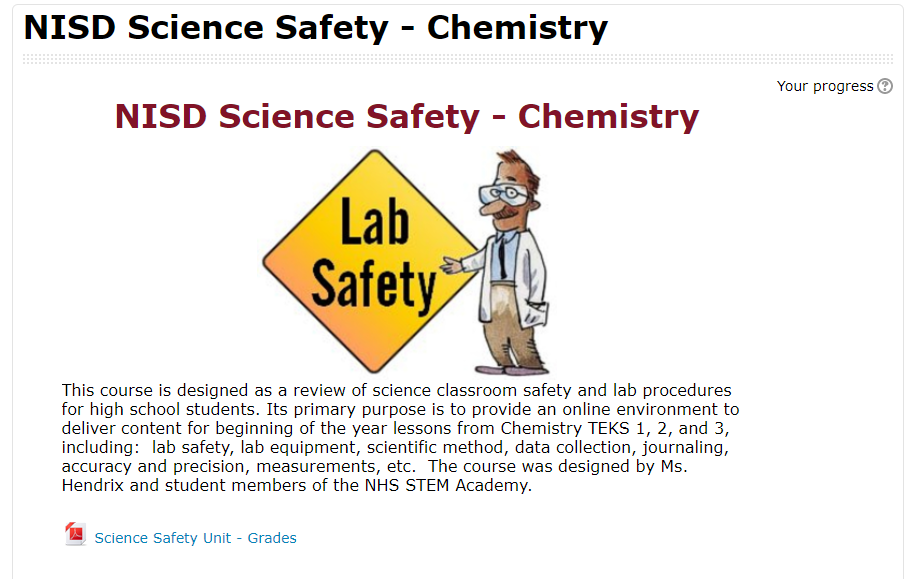 Students were ultimately able to redefine their learning using video editing software (WeVideo, iMovie App, and Adobe Spark), Google Drive and Slides, and various Moodle features to collaboratively teach future classmates.
Essentially, each team of students was responsible for a different Lab safety and procedure topic. There were many topics to be covered like journaling, recording scientific data, creating charts and graphs, and the history of science. Each team had to create a note-taking presentation resource, a video, and various assessments for their unit. The teams collaborated to culminate everything in a final product for the next year’s science students to use at the beginning of the school year.
Ms. Hendrix was sure to leave the actual creation of the course to the students, but did help them format it into Moodle so others could benefit from their hard work. Payton said, “[This project] made me reflect on how I learned as a sophomore, and I was able to apply that for other students.” In creating the course, students had to think critically about how people learn, what type of learning sticks, and what resources and content would be best for their intended audience. Everett added, “...we had multiple people who learned different ways in our group, and so each person was able to contribute differently.”
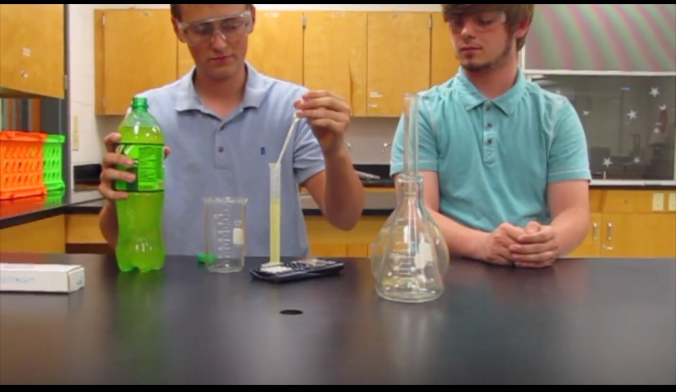
The teams pulled from existing resources and created brand new ones. Many students embedded student-made videos into their Google Slide presentations. Alexis’s team worked hard to make their video entertaining. “We wanted it to be funny because ours was … about doing a write-up,” Alexis noted. “It’s a boring topic for some, so we wanted it to be funny considering our audience [was] teenagers.” As always, some of the biggest learning moments came as students reflected on their work. Hector reminisced, “Out of all of the things that I did that year, I feel like this had the biggest impact.”
Subscribe to:
Posts (Atom)